
CPAP vs Other Sleep Apnoea Treatments: What’s Right for You?
Obstructive Sleep Apnoea (OSA) is a common condition where the airway repeatedly collapses during sleep, leading to poor rest, daytime fatigue, and long-term health risks such as high blood pressure, heart disease, and diabetes. If you’ve been diagnosed with sleep apnoea, the next step is deciding on the most suitable treatment.
Continuous Positive Airway Pressure (CPAP) therapy is often considered the gold standard, but it isn’t the only option. Let’s explore how CPAP compares with other treatments, so you can make an informed decision about what’s right for you.
CPAP Therapy: The Gold Standard
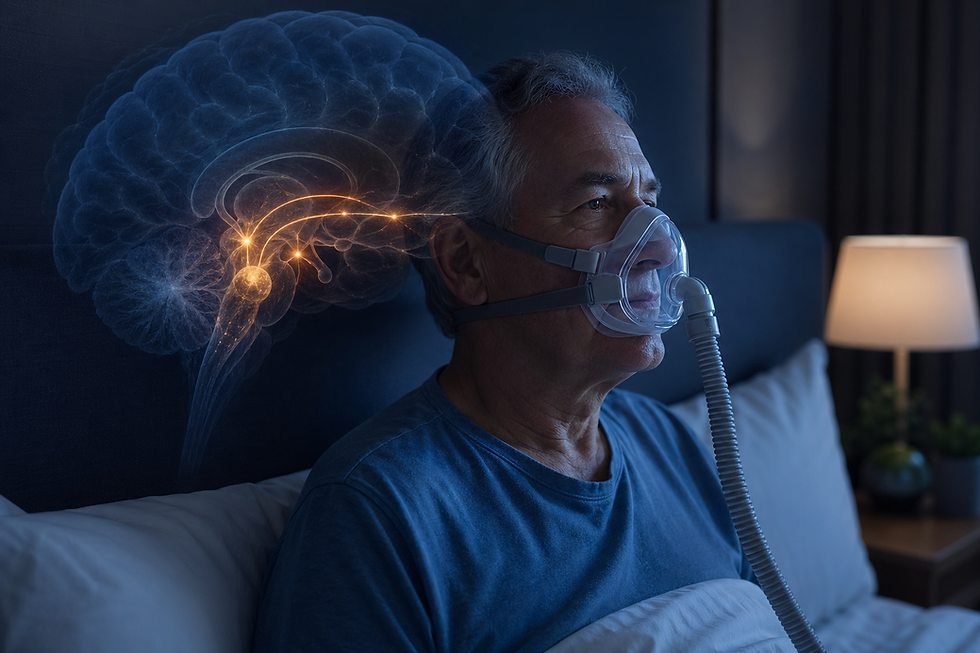
CPAP machines deliver a constant stream of pressurised air through a mask, keeping your airway open throughout the night.
Pros:
Most effective treatment for moderate to severe OSA
Improves sleep quality, energy, and overall health
Reduces risk of cardiovascular complications
Cons:
Requires nightly use and ongoing maintenance
Some people find the mask or airflow uncomfortable
Can take time to adjust to therapy
In recent years, newer PAP algorithms have been developed to improve comfort and effectiveness:
Auto-bilevel devices provide different pressures for inhalation and exhalation, adjusting automatically through the night. This can be more comfortable for patients who struggle with fixed CPAP.
Adaptive servo-ventilation (ASV) is an advanced therapy used in certain types of sleep-disordered breathing (such as central sleep apnoea or complex sleep apnoea). It continuously monitors breathing patterns and adjusts pressure breath by breath.
At Western Respiratory Sleep, we provide physician-led CPAP care, helping patients find the right device, pressure settings, and ongoing support — whether that’s standard CPAP, auto-adjusting devices, or more advanced options.
Oral Appliances
Mandibular advancement splints (MAS) are custom-fitted dental devices that move the lower jaw forward to keep the airway open.
Pros:
Portable and easy to use
May be suitable for mild to moderate OSA
Non-invasive, no machine required
Cons:
Less effective for severe OSA
May cause jaw discomfort, bite changes, or dental issues
Requires regular follow-up with a dentist
Weight Loss and Lifestyle Changes
Since obesity is a major risk factor for OSA, weight loss can reduce symptoms or, in some cases, resolve sleep apnoea. Other lifestyle strategies include reducing alcohol, avoiding sedatives, and improving sleep hygiene.
In addition to diet and exercise, pharmacological weight loss options such as GLP-1 receptor agonists (e.g. semaglutide) are now being used in selected patients with obesity. These medications have shown promising results in reducing body weight and, in some cases, improving sleep apnoea severity.
Pros:
Improves overall health and reduces cardiovascular risk
May reduce or even eliminate the need for long-term sleep apnoea treatment
Pharmacological options provide support for patients who struggle with lifestyle changes alone
Cons:
Results take time and vary between individuals
Not always sufficient for moderate to severe OSA
Weight loss medications may have side effects and require medical supervision
Even if weight loss strategies (including medications) are part of the treatment plan, CPAP may still be required in the short to medium term to control symptoms and protect overall health. At Western Respiratory Sleep, we often combine CPAP therapy with weight management support, tailoring care to each patient’s long-term goals.
Surgery
Surgical options aim to widen the airway by removing or repositioning tissue in the throat or correcting anatomical abnormalities.
Pros:
May provide long-term relief for select patients
Can be effective if OSA is due to structural issues
Cons:
Invasive, with risks of surgery and recovery
Success rates vary
OSA can return over time
Positional Therapy
Some people only experience OSA when sleeping on their back. Devices or techniques that encourage side-sleeping can reduce symptoms.
Pros:
Non-invasive and simple
Useful for positional OSA
Cons:
Limited effectiveness for most patients
Often used as an adjunct, not a standalone treatment
Experimental and Emerging Therapies
Research into sleep apnoea is ongoing, and several newer therapies are being explored:
Pharmacological therapy – Certain medications are under investigation to improve airway muscle tone or reduce collapsibility, but none are yet standard treatment.
Hypoglossal nerve stimulation – A surgically implanted device stimulates the tongue muscles during sleep to keep the airway open. This shows promise in selected patients who cannot tolerate CPAP.
Oxygen therapy – Supplemental oxygen may improve oxygen levels at night but doesn’t address airway obstruction, so it is usually considered an adjunct rather than a standalone treatment.
These therapies are not widely available and are typically reserved for patients who do not respond to conventional treatments.


Comments