
The Hidden Link Between Sleep Apnoea and Memory Problems
- chenglong83
- Oct 9, 2025
- 3 min read
When we think about sleep apnoea, most people picture loud snoring, tired mornings, or the need for a CPAP machine. But new research is showing that sleep apnoea doesn’t just affect how we sleep — it may also affect how we think, remember, and even protect our brain from long-term decline.
Scientists are discovering growing evidence that untreated sleep apnoea can contribute to problems with memory, attention, and decision-making, and may even increase the risk of dementia over time.
Let’s explore what we know so far — and what you can do to protect your brain.
What Happens to the Brain During Sleep Apnoea?
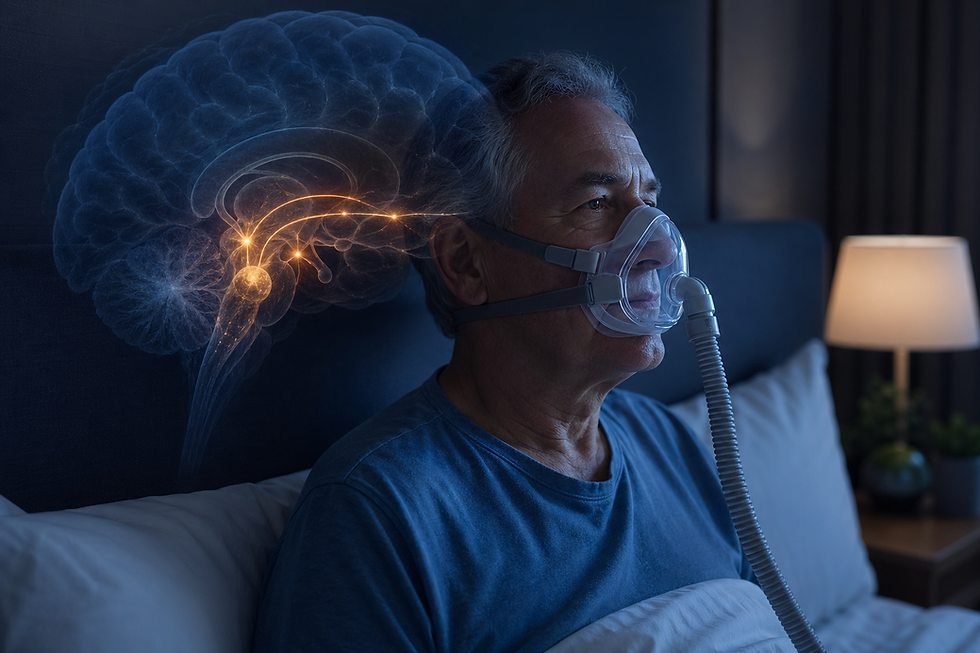
When someone has sleep apnoea, their breathing repeatedly stops and starts during the night. Each pause can lower oxygen levels and briefly wake the brain, even if the person doesn’t remember it.
Over time, these cycles of low oxygen and broken sleep can cause stress to brain cells and blood vessels. Research shows this may lead to:
Inflammation and stress on brain cells
Reduced blood flow to the brain
Poorer sleep quality and loss of deep “restorative” sleep
Difficulty forming and storing memories
It’s like running a marathon every night — your brain never gets the full rest it needs to recover.
How Does Sleep Apnoea Affect Thinking and Memory?
Studies have found that people with untreated sleep apnoea often show problems in areas such as:
Attention and focus – finding it harder to concentrate or stay alert
Memory – forgetting details or struggling to recall names or tasks
Decision-making and planning – taking longer to think through problems
Mood and motivation – feeling more irritable, anxious, or flat
In some studies, up to one in three people with moderate or severe sleep apnoea showed signs of mild cognitive impairment (MCI) — a stage between normal aging and dementia.
Can Treating Sleep Apnoea Help Protect the Brain?
The good news: there’s growing evidence that CPAP treatment may help protect brain function.
Research shows that people who use their CPAP machine regularly have better scores on memory and attention tests compared to those who don’t. Some studies in people with early Alzheimer’s disease even suggest that using CPAP may slow cognitive decline.
The benefits may take time — often months to years — but they can be meaningful. Every night of good-quality, oxygen-rich sleep helps your brain recharge.
Who’s Most at Risk?
You may be at higher risk of cognitive changes from sleep apnoea if you:
Have severe or long-standing sleep apnoea
Are over 50 or have other health issues like high blood pressure or diabetes
Have a family history of dementia or carry certain genetic risk factors
Don’t get enough deep or REM sleep, even with treatment
This doesn’t mean that everyone with sleep apnoea will develop memory problems — but it does mean that keeping your sleep healthy is an important part of looking after your brain.
What You Can Do
If you have sleep apnoea or suspect it:
Stick with your CPAP therapy. It’s one of the most effective ways to keep oxygen levels steady and prevent nightly stress on the brain.
Ask about follow-up testing. Your sleep doctor can help ensure your CPAP settings are right and that you’re getting good sleep quality.
Look after your overall brain health. Stay active, eat well, keep your mind engaged, and manage conditions like high blood pressure or diabetes.
Notice changes early. If you or your family notice problems with memory, attention, or thinking, talk to your doctor early — there may be reversible causes.
The Takeaway
Sleep apnoea is more than just snoring or tiredness — it’s a whole-body condition that can quietly affect brain health. By treating sleep apnoea and improving sleep quality, you’re not only improving your energy levels and mood — you may also be helping to protect your memory for years to come.


Comments