
The Sleep Therapy Journey: Why Treatment Is More Than Just a Machine
Most people think treating sleep apnoea is simple.
You get diagnosed.You get a machine.You sleep better.
But for many patients, that’s not what happens.
They try CPAP… and stop.They feel no better… and give up.
The problem is not the treatment.
It is the lack of a structured therapy journey.

A Familiar Story
Mark is a 52-year-old professional.
He was diagnosed with sleep apnoea after years of snoring and fatigue.
He started CPAP.
For the first few nights, he tried hard to make it work.But the mask leaked. The pressure felt uncomfortable.He woke up more often than before.
Within two weeks, he stopped.
“CPAP just doesn’t work for me.”
Six months later, he was still tired.His blood pressure had worsened.
Nothing had changed.
What Went Wrong?
Mark did not fail CPAP.
In some cases, CPAP alone is not enough—because sleep apnoea may not be the only problem.
He was never taken through a proper therapy journey.
Sleep apnoea is not a device problem.It is a chronic medical condition that requires structured care.
When Sleep Apnoea Is Not the Whole Story
Not all sleep problems are caused by sleep apnoea alone.
Some patients are diagnosed correctly—but still do not feel better.
This is often due to overlapping conditions, such as:
Restless legs syndrome
Periodic limb movement disorder
Chronic insomnia
Circadian rhythm disruption
In these cases, sleep apnoea can become a red herring.
Treating only one problem does not fix the whole system.
Still tired despite CPAP?
It may not be the machine—it may be that something else is being missed.
Where Most People Struggle
1. Starting Without the Right Therapy
Not all patients require the same treatment.
Wrong selection → poor tolerance and early failure.
2. No Support During the First Few Weeks
The first 2–4 weeks are critical.
Common issues:
Mask discomfort
Pressure intolerance
Fragmented sleep
Without support, many patients stop early.
3. No Optimisation
Most providers stop at:
“Here is your machine.”
But therapy requires:
Mask adjustment
Pressure refinement
Data review
4. No Long-Term Follow-Up
Sleep apnoea evolves over time.
Without monitoring, therapy effectiveness declines.
What a Proper Sleep Therapy Journey Looks Like
At Western Respiratory Sleep, our Sleep Therapy Journey is delivered as part of a physician-led pathway.
Structured Start
Careful therapy selection
Proper mask fitting
Individualised setup
Early Optimisation
Regular review in first weeks
Adjustments based on data
Active troubleshooting
Ongoing Monitoring
Remote tracking
Continuous refinement
Long-term support
Why People Delay Treatment
Many people recognise the symptoms—but still hesitate.
Common thoughts:
“It’s just stress”
“I tried CPAP before”
“I’ll deal with it later”
But untreated sleep apnoea is linked to:
Cardiovascular disease
Reduced cognitive performance
Poor quality of life
When Should You Act?
You should consider assessment or review if you have:
Persistent fatigue despite adequate sleep
Loud snoring or witnessed apnoeas
Previous CPAP failure
Hypertension requiring multiple medications
If you’ve tried CPAP before and stopped,it doesn’t mean treatment has failed.
It may mean the journey wasn’t done properly.
The Bottom Line
Sleep therapy works.
But only when it is:
Correctly selected
Properly initiated
Actively optimised
Continuously monitored
Because success is not about the device.
It is about the journey around it.

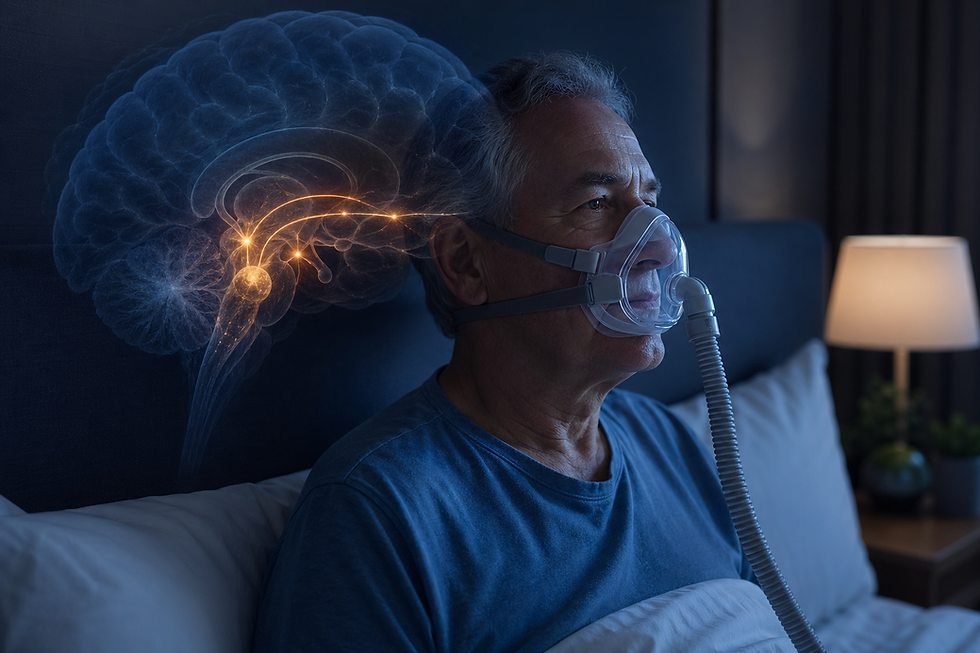

I thought the only thing that I did correctly in my life was SLEEP. After an emergency admission for AF and life-threatening blood clots which may have been due to a trifecta of Covid-19, RSV, and Flu, I count myself lucky to still be here. Ongoing care has been amazing but imagine my surprise when my diligent respiratory doctor suggested a sleep test. I thought my doctor was a bit bonkers, but I was the one wearing egg on my face, he was correct, I did have Sleep Apnoea. I was devasted, but I had a structured 4-week period of appointments with professionals to find my best fit with a CPAP mask and the tailored settings of the CPAP machi…